


The general rule: repair your AC if it's under 10 years old and the fix costs less than roughly a third of a new system; replace it if it's 12–15+ years old, uses R-22 refrigerant, or needs a major component like a compressor. In our humid Louisiana climate, systems typically last 10–15 years, shorter than the national average. Efficiency, repair frequency, and comfort all factor into the right decision.
It usually happens on the hottest week of a New Orleans summer. The air conditioner that limped through last year finally quits, the house climbs into the mid-80s, and you're left staring at a repair estimate wondering whether to fix the old unit or start over. It's one of the most common decisions homeowners face along the Gulf Coast, and one of the easiest to get wrong.
At A & P Solutions, we've been helping families across Chalmette, Metairie, the Westbank, and the Northshore make this call since 2012. Led by Paul Herkes, who brings more than 30 years of hands-on industry experience, our licensed and EPA-certified team sees firsthand how our brutal humidity, salt air, and long cooling seasons wear systems down faster than in almost any other part of the country. Here's what we tell homeowners before they spend a dollar.
The general rule: repair your AC if it's under 10 years old and the fix costs less than roughly a third of a new system; replace it if it's 12–15+ years old, uses R-22 refrigerant, or needs a major component like a compressor. In our humid Louisiana climate, systems typically last 10–15 years, shorter than the national average. Efficiency, repair frequency, and comfort all factor into the right decision.
When to call a professional: If your AC is short-cycling, blowing warm air, leaking refrigerant, tripping breakers, or you're facing a repair over $1,500, have a licensed technician diagnose it before deciding. A proper diagnosis prevents both wasted repairs and premature replacement.
Age is the single biggest factor. Air conditioners are engineered for a 15–20 year life, but along the Louisiana and Mississippi Gulf Coast, salt-laden air, near-constant runtime, and relentless humidity commonly shorten that to 10–15 years. Homeowners notice it as declining performance, the unit that once cooled the house by mid-morning now runs all day. This happens because coils corrode, bearings wear, and refrigerant seals degrade after years of heavy cycling. The risk of pouring money into an aging system is compounding failure: fix one part today, and another fails next month. In neighborhoods close to the water like Bay St. Louis, Pass Christian, and parts of St. Bernard Parish, we routinely see outdoor condenser coils corroded years earlier than inland units. Once a system crosses the 12-year mark and starts needing frequent attention, repair dollars rarely pay off.
If your system still runs on R-22 refrigerant, that alone can tip the scale toward replacement. R-22 was phased out of production in the U.S. in 2020, and remaining supplies are expensive and shrinking. Homeowners usually discover this when a leak repair quote includes a shocking refrigerant charge. It happens because any AC manufactured before roughly 2010 likely uses R-22, and recharging a leaking R-22 system can cost hundreds of dollars per pound. The risk is spending heavily to top off a system that will leak again, only to face the same bill next season. Newer systems use R-410A (and now A2L refrigerants), which cool more efficiently and cost far less to service. For our customers with pre-2010 units, we're transparent: a major R-22 repair is often money better applied toward a modern, more efficient system.
The compressor is the heart of your air conditioner, and its failure is often the deciding blow. Homeowners notice it as a unit that runs but never cools, loud clanking or humming, or a breaker that trips repeatedly. Compressors fail from age, electrical stress, refrigerant problems, or years of overwork in our long cooling season. The risk is cost: replacing a compressor is one of the most expensive AC repairs, and on an older system it rarely makes financial sense. When the compressor goes on a unit past 10 years, we generally recommend weighing replacement, because the money spent props up a system already nearing the end of its life while other components remain worn.
A creeping electric bill is one of the clearest signals a system is losing efficiency. Homeowners notice it when cooling costs climb summer over summer even though usage habits haven't changed. It happens because aging compressors and dirty, corroded coils force the system to work harder for the same result, and older units carry far lower SEER2 efficiency ratings than modern equipment. The risk isn't a breakdown, it's quietly overpaying every month. Because Gulf Coast homes run AC for the better part of the year, efficiency gains here pay back faster than almost anywhere. The U.S. Department of Energy notes that upgrading an old central air conditioner can substantially cut cooling costs, and Louisiana homeowners may qualify for savings through Entergy's Energy Smart program.
Two or three service calls in a single season is a pattern, not bad luck. Homeowners notice it as a familiar frustration, another warm afternoon, another technician visit. It happens because once one aging component fails, the added strain accelerates wear on the others. The risk is the "death by a thousand cuts" scenario, where individual repairs seem affordable but collectively exceed the cost of a new system within a year or two. We keep records for our maintenance-plan members precisely so we can show, objectively, when repair spending has crossed into replacement territory. If you've called for service more than twice in the last 12 months, it's worth a candid conversation.
In our region, comfort is about more than temperature. Homeowners notice a struggling system as sticky, clammy indoor air, musty smells, or rooms that never quite cool evenly. It happens because an undersized, aging, or failing AC can no longer pull enough moisture out of the air, a serious issue when outdoor humidity sits above 70% for months. The risk goes beyond discomfort: excess indoor humidity encourages mold growth and can damage wood floors and furniture. Modern variable-speed systems, properly sized using the ACCA Manual S standard, dehumidify far better than older single-stage units. When humidity complaints persist despite repairs, replacement often solves what a fix cannot.
Before you assume the worst, a few safe checks can rule out simple problems:
Safety reminder: Never open the electrical panel of your condenser or handle refrigerant lines yourself. Refrigerant handling legally requires EPA certification. When in doubt, shut the system off and call a licensed technician.
Use this framework to guide your decision:
Repair when:
Replace when:
A helpful shortcut many technicians use is the $5,000 rule: multiply the repair cost by the system's age. If the result exceeds $5,000, replacement is usually the smarter investment. A $500 repair on a 12-year-old unit ($6,000) leans toward replacement; the same repair on a 4-year-old unit ($2,000) points to fixing it.
Every home is different, so these are realistic ranges rather than fixed prices. A & P Solutions charges a $95 diagnostic fee (which covers minor fixes completed in the first 30 minutes) and offers free estimates on replacements.
Minor repair (capacitor, contactor, drain line): roughly $150–$450. These are common, affordable fixes that often restore an otherwise healthy system.
Mid-range repair (fan motor, refrigerant leak repair and recharge, control board): roughly $500–$1,500, depending on refrigerant type and parts.
Major repair or replacement (compressor, or full system swap): compressor replacement can run $1,500–$2,800+; a complete central AC or heat pump system installation typically ranges $6,000–$14,000+ depending on size, efficiency, and ductwork.
Factors affecting price:
Financing is available through Synchrony, and installations over $10,000 require a licensed contractor under Louisiana State Licensing Board rules, a standard A & P Solutions meets in both Louisiana and Mississippi.
When you call A & P Solutions, here's what to expect:
Chalmette: the 14-year-old R-22 dilemma. A homeowner off Judge Perez called after their AC stopped cooling for the third time in one summer. Our technician found a refrigerant leak in an aging R-22 condenser and a weakening compressor. Rather than charge for costly R-22, we walked them through the numbers. They chose a new high-efficiency American Standard system, installed in a single day, and cut their July electric bill noticeably.
Metairie: a repair worth making. In Old Metairie, a 6-year-old Carrier unit was blowing warm air. Diagnosis revealed a failed capacitor and a dirty coil, not a system on its last legs. We replaced the capacitor, cleaned the coil, and the homeowner was back to full cooling the same afternoon for a fraction of replacement cost. Age and condition made repair the clear choice.
Slidell: humidity that repairs couldn't fix. A Northshore family kept complaining of sticky, musty air despite two prior service calls on an 11-year-old single-stage unit. The system simply couldn't dehumidify. We installed a properly sized variable-speed system, and the persistent humidity and mustiness disappeared.
The $5,000 rule says to multiply your repair cost by the age of the system; if the total exceeds $5,000, replacement is usually the better investment. For example, a $500 repair on a 12-year-old unit equals $6,000, which points toward replacing it. It's a quick gut-check, not a substitute for a professional diagnosis.
Replace your HVAC system when it's 12–15+ years old, uses R-22 refrigerant, needs a major repair like a compressor, breaks down repeatedly, or drives rising energy bills. In our humid Gulf Coast climate, systems age faster, so any two or three of these signs together usually means replacement is the smarter long-term move.
Generally, no, a 20-year-old AC is well past its typical Gulf Coast lifespan, likely uses phased-out R-22 refrigerant, and runs at a low efficiency rating. Even affordable repairs on a unit that old rarely pay off, because other components are near failure too. A modern replacement usually delivers better comfort and far lower cooling bills.
A full HVAC replacement in the New Orleans and Gulf Coast area typically ranges from about $6,000 to $14,000+, depending on system size, efficiency rating, brand, and ductwork condition. A & P Solutions offers free replacement estimates and financing through Synchrony, and installations over $10,000 legally require a licensed contractor in Louisiana.
Most residential AC or heat pump replacements take a single day, occasionally two if ductwork needs work. At A & P Solutions, our team completes standard HVAC installs within one day and two days at most. You don't need to be home during installation as long as our technicians have access to the equipment.
Air conditioners in the New Orleans and Mississippi Gulf Coast area typically last 10–15 years, shorter than the national average because of our humidity, salt air, and long cooling season. Regular maintenance extends that lifespan, which is why our bi-annual maintenance plan keeps systems running efficiently and catches small problems before they become failures.
Yes, A & P Solutions handles all required permits and inspections for AC and HVAC replacements across our service area. We're licensed and insured in both Louisiana and Mississippi, so you never have to navigate the permitting process yourself, it's included as part of our professional installation.
Deciding whether to repair or replace your air conditioner shouldn't feel like a gamble. The team at A & P Solutions will give you an honest diagnosis and clear options, no pressure, no guesswork. As a Christian-owned, family-founded contractor serving Chalmette, New Orleans, Metairie, the Westbank, the Northshore, and the Mississippi Gulf Coast since 2012, we're here to help you make the right call for your home and budget. Call (504) 304-1127 anytime, we answer live 24/7 and offer same-day service. Let our licensed, EPA-certified team keep your home cool and comfortable.
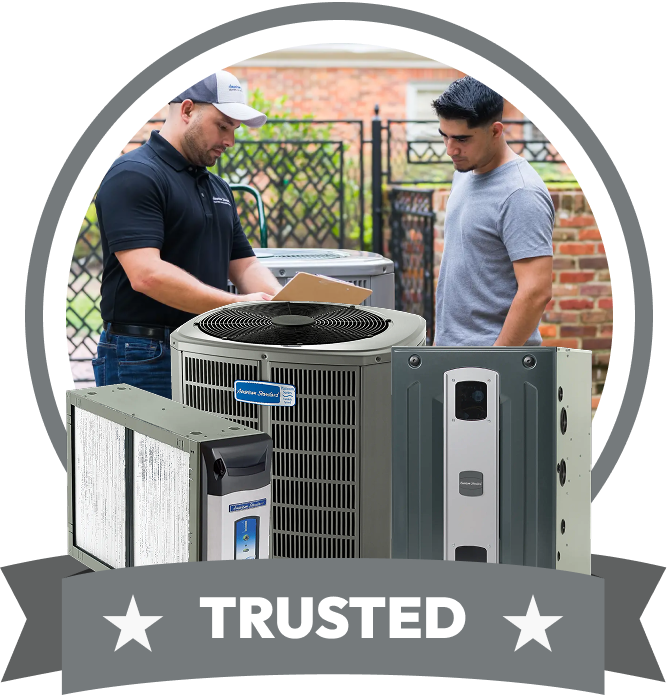
Trust matter when choosing a provider in , Louisiana. At A & P Solutions, we work hard to earn that trust on every visit. We show up on time, communicate clearly, and complete every air conditioning, heating, electrical, and generator job with care.
As a BBB-affilitated, family owned, Christian based company, we believe in treating customers the way we could treat our own neighbors. Our technicians are background-checked and drug-tested, so you always know who is working in your home. We go beyond quick fixes by focusing on long-term solutions that protect your comfort and safety.
We take pride in serving the , Louisiana community and standing behind our workmanship. When you call 504-304-1127, you can expect honest answers, professional service, and results you can rely on.

If you're dealing with AC trouble, heating issues, plumbing leaks, electrical concerns, or generator needs, A & P Solutions is ready to help. We provide dependable services throughout , Louisiana with a focus on trust, safety, and long-term solutions. Our team responds quickly, communicates clearly, and handles air conditioning, heating, plumbing, electrical, and whole-home generator services with professionalism and care.
As a family-owned, Christian based company and proud BBB member, we are committed to doing the job right. With background-checked and drug-tested technicians, your home is in capable hands.
Call 504-304-1127 today to schedule your service in , Louisiana and let A & P Solutions restore comfort and reliability to your home.



Open 24/7